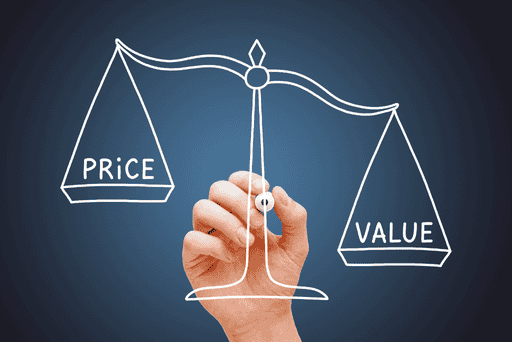
In this episode, we break down the often overlooked truth about pricing: the deliverables you include will be shaped by the price you set – not the other way around. You’ll also hear real talk about starting low versus charging what your transformation is worth.
If you’ve been spinning your wheels on pricing, this conversation will help you rethink your approach and find a path that’s both sustainable and valuable.
Subscribe To The Show
3 Big Take Aways
- Start with the price that matches your desired income
- Early low pricing can attract the wrong long-term audience
- You can always adjust your price – it’s not permanent
Resources
- Memberships Mastermind: Join our FREE Monthly Memberships Mastermind Calls where online entrepreneurs get real-time help on their memberships. No fluff. No funnel hacking. Just laser-focused feedback, real breakthroughs, and a community that gets it.
- Adaptive Marketers: For online entrepreneurs, service providers, & business owners who want predictable results and more sales, easier and faster.
Connect with us on social!
Instagram:@realpaulpruitt & @realmelissapruitt
Facebook: @realpaulpruitt & @realmelissapruitt
Subscribe To The Podcast
And if you loved this episode, please share with a friend and leave us a
review!
Kristen: So my question is about pricing. I'm getting ready to out a membership. I serve adult children with aging parents, so my business is called Navigating Senior Living. have an Instagram following and an email list. my membership is going to be really community based, so it's not so much an educational success path per se.
I'll have some tools and resources in there for people, but it's really going to have the private Facebook group, live Q&As with me, and then guest speakers. So I'm really interested. I'm just going back and forth on pricing. I'll be thinking about doing a lower price for the founding members, And I haven't said the final price to folks. I just wanted to kind of see what people's opinions are on here.
Either through memberships they have memberships they belong to and what they feel like is a reasonable price point to pay for that type of a membership. That's more about the community
Paul: what is the transformation that you're promising? Like if they come in the part of this community, what's the outcome or what should they expect?
Kristen: So my background is as a senior living executive, so I have a lot of insider knowledge and information and Tools that I can give them about helping their aging parent either at home or as they transition into senior living.
So they have access to me. Then they have access to a group of adult children who are in their similar position. And then I'm bringing in specialized speakers on things like Medicaid or Medicare or things home care. So it gives them access to a whole segment of knowledge without them having to go through googling and trying to find those answers themselves. And then they have access to the community and to me.
So the transformation is peace of mind, being able to anticipate what's going to happen, get themselves prepared ahead of time not to be scrambling in a crisis because they've known what's going to come down the line and then they can prepare for it and also readily have that information at their fingertips when something does happen with mom or dad.
Paul: Great. Excellent. Excellent.
So anybody have any clarifying questions and or opinions as far as that general generalization so far? Because we didn't get into nitty gritty of deliverables and other things. What the price point you would be looking at?
Suzanne: What are you considering charging? Like what are you thinking right now?
Kristen: 27 with maybe a lower price to start. Other ones that I've kind of seen out in the market specifically based on dementia as an example.
There are a few of those Are priced anywhere between 27 There really aren't others that are specifically around senior living or aging parents. There are some free Facebook groups and then they have some private memberships off of that. But there's not a lot that's very similar to what I have.
Paul: think Carolyn had her hand up.
Carolyn (2): I wouldn't worry about the starting price as long as it's low enough that you've got room to go up because over time you, you can increase it would be my thought on it anyway.
Suzanne: Okay.
Paul: And guys, do you want to participate in this because you can just raise your physical hand. I know we just reversed on you so that's why we're screwing you all up. But I see. Put your reaction hand up. You can jump in
Cas: so as a senior now, I think if you keep your price low, it's much more appealing. However, there are going to be there. And Paul taught me this, there are people who are willing to pay more.
And so I think you do a value add. if this is an emergency and you need a one hour consult and we put together an action plan, next steps for the next 90 days, then you could charge whatever you want, $150. And I only do those a month or whatever. And so you could just test the waters. you can put an offer out there and see if somebody, call, push me to put my price up.
And the only reason I put my price up three years ago was to prove he was wrong. It made me so mad, my income. So it is kind of interesting when you hold inside of you these beliefs, what happens? And because I was like, oh, he's so out of touch. He doesn't know what parents of teen athletes are going to pay. And then it cracked me up. He used CAS on cas, which I hate.
I always, for friends, it'll repeat me to me. I'll be like, don't do CAS on cas. That really frustrates her. But he said, you know, how much does a hockey stick cost? a good one, like 1700. How much does a, you know, volleyball tournament competition qualifier cost? Well, about 3,000. And then all of a sudden I was like, now I'm really mad at him, so I'm going to prove he's wrong.
So my advice is start somewhere with the adage of I might not pay that, but there's always some. The first client took two memberships for two teenagers
Candace: and it was 750 for the first month. So I was like, so much money. So do, put out there an emergency consult and do four months, six a month, whatever you can do, and price it 150, 200 bucks.
Kristen: Yeah, no, thank you. That's helpful. And I do, I do offer one on one right now. I thought about perhaps as a benefit of the membership that they have more immediate access to the one on ones or perhaps a slightly lower price point. Do you ever think that there's a way, there's a dynamic, that if I priced it, say too low for the founding members, say if I took $10 off that 27 and it was like 17 or 19, do people then think, wow, that is so low, there's no value there, or no What do you all think as consumers? If you saw a membership like that
Cas: you have VIP challenge. Oh, it's only 10 bucks a month. But for VIP at 27, I get one more thing, whatever that is, and then see where they go. Are most people come and. Or most people leveling up to the VIP. You know, I'm only going to do 57 platinum VIPs. And it's like, well, I want to be one of those.
And then you're like, oh, 27 is a place to start.
Kristen: Okay,
Paul: great. Thank you, guys. Anyone else have any insight or feelings about. I have a lot of feelings about pricing.
Melissa: I think I'm just gonna. I'm gonna let you take this one. I. I would say, you know, you. You do have to find your. Your sweet spot too. and just know with pricing that nothing is permanent as well too.
So what you start off with you, it can change. But I'm going to let you jam on this because I know you love. You love talking about pricing.
Paul: Well, definitely there is a sweet spot. We even. Were in a Jeff Walker mastermind years ago, and Jeff looked right at me and he's like, Paul, you need to. I don't understand your pricing on your programs. You need up your pricing.
We walked out, we doubled the price on both of our programs, and then 90 days later, nobody submitted an application on either program. They were like, oof, okay. We were in the sweet spot. And of course, if you go in any room, everybody's going to always tell you to up your price, up your price, up your price. But you are somewhere on the virtual store shelf in the marketplace.
How you're positioned, how your package and what people are willing to pay to have the problem fixed. so there's only a certain available market. As you go up in price, there's less people that are already willing, able to pay that price for that solution. And you might not be relevant to that group of people. Like, they might see somebody else as a celebrity or positioned or whatever.
So we always had to keep that part in mind. And Melissa and I, we tucked the tail between our legs. We're like, you know what? You know, they. Everybody else perceives these other people in the market at that price point. People don't see us that way. Let's just go back to our pricing. That's. We were hovering, you know, x amount of applications a month, and life was good.
And we're not greedy and we're very happy But you don't know until you try, though, So that's the one thing some of us are Throttling our own success. Now what I would do for all of you when it comes to price, I'm going to give you a very short version of something that also would take a longer, way longer time to go into is where most of us are doing all this wrong, where you buy it.
Buy into the Internet marketing $2,000 courses and everybody tells you, you know, do these lower price things right out the gate, build yourself up and da da da da da and everything. And that's because most of us are not good at marketing sales. Most of us, us have imposter syndrome and we don't think we're worthy. And the irony is when you finally get the confidence or the illusion of that degree or whatever you think you needed to get suddenly, or you get to the point of burnout where the low price people that you did sell to initially are burning you out, that you finally raise your price and then what ends up happening is you find a market, you find a group of people in the market that from day one are just willing to pay you that price.
The people that were around you before that you convinced at a lower price, they're suddenly like oh, they're not your ideal client anymore. So a lot of us you're, you're re doing the work because like you build an audience that expects you to give them a ten or fifteen dollar month thing and that's how they position you and they see you. And then when you do want to have the $100 a month thing, you had to go out and get a new audience because the people you collect it see you through a certain lens.
So what I recommend is that this is the hard pill for all of us to swallow is truly by yourself write down how much money you really not the dream based thing and have the mansion and Lamborghinis and all that crap that people sell you in the space but like legit like what do you really want to get out of this business? And then look at that monthly amount and sit down by yourself and figure out how many different ways you can get to that number doing a membership.
Because you got to sell a lot of $17 to support yourself.
Carol: Yeah, right.
Paul: And there's so many people that are buying in the semi shiny object on like oh do look ticket memberships. Yes. Melissa and I have this as a low ticket membership. After we had a thousand dollar month membership, a $500 a month membership, $100 a month membership, now we introduced a $10 a month membership. Like we're nearly making seven figures a year before we introduce this.
Because when you're doing a $10 or $20 thing you have to have suddenly an email list of tens of thousands of people so that this small group of people at any frequency will end up buying even a $10 thing from you. That makes sense. And it's like, and that barely will pay the bill and everybody is being sold. mainly the main influencers tell you to do start low and work your way up because again people aren't good at marketing, sales or they lack confidence and they want you to have some type of win.
By the end of their eight week course they want you to have two members, five members, something so that you can celebrate. So if your people think they're getting a really good deal, then some of them will probably say yes. And that kind of makes up for the lack of being able to market and sell properly, so but then you're stuck after the eight week course and like now you want your rate that you know you're worth.
And now you have to get good at marketing and sales because now you're going to complete strangers, not to your friends list, you know, anymore. So start with the number that you really want. And this is, we normally do this exercise on a sheet of paper and everything. I'm just going to be quick of it. Start with the price that you want of your membership because a 27 membership you're going to think of different deliverables right out the gate.
If you started with 97, you're immediately going to think of completely different deliverables that you're willing to do in a different promise of transformation. If it's at $1,000 a month, you would just instantly think of different deliverables and different, transformation that you would promise. So where a lot of people mess up is they create the thing a course or a membership and then they tried to force a price point on people and that's where people mess up
is what you want to do is think of the price point.
Because what we're, because a lot of us are trying to do is like we build a McDonald's and we're trying to get Ruth Chris Steakhouse prices off of people. And it's like, doesn't work that way. You don't work your way up to a Ruth Cross Steakhouse, you just decide at the gate. I'm sorry for anybody that's vegan. Use that as an example. so what it is though is if you start the price point and even if you for you know, initial launch you discount a little bit as an incentive to get people in.
But like what is that price point? And then your deliverables, you know there's high, there's high and low perceived value deliverables. You could spend every month and like do a PDF every week to your people and it might take you an hour to like curate, another hour to design it and upload and everything like that. At the end of the day, the output, the perceived values. You just gave me a PDF you could at the same time show up and do a one hour zoom call and answer people's questions live for one hour every week.
And it has such a higher perceived value but you still spent the same amount of resource into it. Does that make sense? That's an
Kristen: interesting way to look at it. Yeah,
Paul: yeah. So not all deliverables are equal.
Kristen: Right, Right.
Paul: So you got to be careful because you can go on burnout by giving trinkets to people that spend a lot of time and energy and getting and they don't see the higher perceived value in the thing.
So there's just, there's a lot of things to think about when you're looking at pricing. It doesn't mean you have to work harder but it's just like being more strategic as far as what you are delivering. So it has a higher perceived value. And there's technically for all of us, we all have a hierarchy of how we perceive things. Things no matter the energy and effort. It's the what's called the point of diminishing returns is like that same hour if it was one to one coaching, high perceived value if it was face to face high perceived value.
If it was a small group coaching program, you know, like something like this call good value but lower than one to one, you know, I mean like so we can still take that same amount of energy resource and time resource and we can look at things differently. A pre recorded video. Nice. I can watch at any point in time. Probably not as high as that. One hour of one to one or small group where I can get my questions answered.
So I just want you to think of there's a hierarchy of perceived value of resources you put into a deliverable. It can dramatically impact how your price point is. So
Kristen: that makes sense.
Paul: Yeah, I try to wrap like squish like a two day training and like know. I just a little bit. Just to get your mind thinking a little bit.
Kristen: Thank you.
Melissa: Oh you're welcome.